
Digital vs Analog Voltmeters: Which is More Accurate?

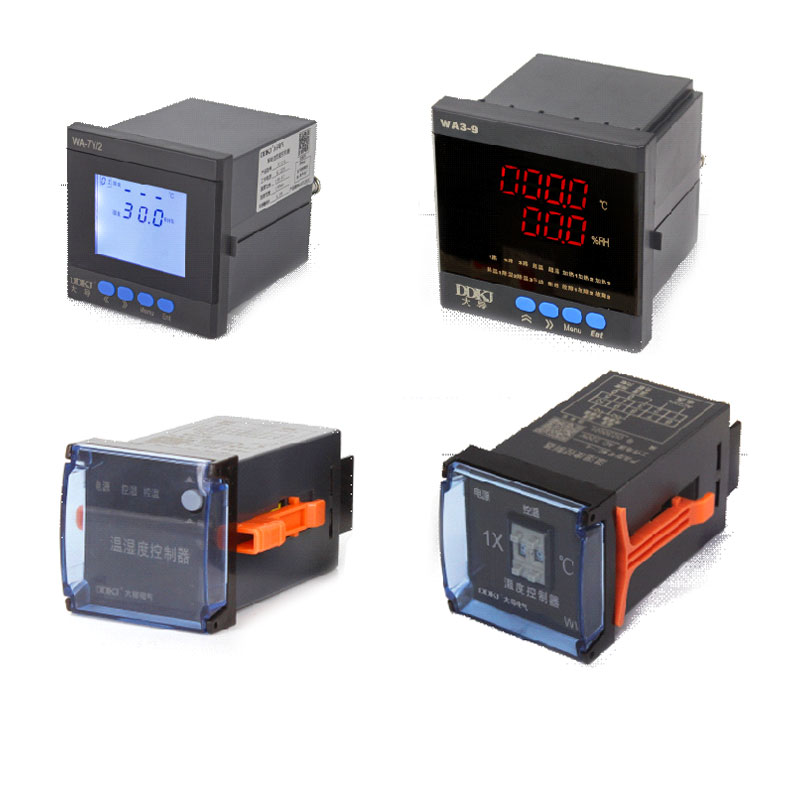
Voltmeters play a crucial role in electrical measurements, helping you gauge voltage levels accurately. They come in two main types: digital and analog. Digital voltmeters offer precise numerical readings, reducing user error and providing reliable results. Analog voltmeters, on the other hand, use a needle and dial, offering a steady display that some users prefer for certain applications. The debate over which type is more accurate remains ongoing. While digital voltmeters excel in precision, analog models can be more responsive in specific scenarios, such as ac voltmeter use. Understanding these differences helps you choose the right tool for your needs.
Understanding Voltmeters
What is a Digital Voltmeter?
Definition and basic functionality
A digital voltmeter measures voltage by converting analog signals into digital data. This conversion process involves an analog-to-digital converter, which translates the voltage into a numerical display. You will find that digital voltmeters often feature a bright LED display, making it easy to read the voltage even in dimly lit environments. The precision of these devices is notable, with readings typically presented in 3½ or 4½ digits. This high resolution is crucial for applications requiring exact measurements, ensuring you can monitor voltage levels accurately.
Common applications and use cases
Digital voltmeters are versatile tools. They can measure both direct current (DC) and alternating current (AC), making them suitable for a wide range of applications. Industries that demand precise voltage monitoring, such as telecommunications, electronics, and automotive sectors, often rely on digital voltmeters. You will appreciate their ease of use, as they provide exact numerical values, reducing the likelihood of user error. This makes them ideal for both professional technicians and hobbyists who need reliable and straightforward voltage readings.
What is an Analog Voltmeter?
Definition and basic functionality
An analog voltmeter uses a needle and dial to display voltage levels. The needle moves across a calibrated scale, indicating the voltage present in the circuit. This type of voltmeter responds quickly to changes in voltage, which can be advantageous in certain testing scenarios. You might find analog voltmeters less precise than their digital counterparts, but they offer a steady display that some users prefer for specific applications.
Common applications and use cases
Analog voltmeters are often used in situations where quick response times are necessary. They are particularly useful in testing components like small DC motors, where rapid voltage changes occur. You may also find them in educational settings, where they help students understand the principles of voltage measurement. Despite being less accurate, analog voltmeters are typically more durable and cost-effective, making them a practical choice for basic voltage monitoring tasks.
Comparing Accuracy
Accuracy of Digital Voltmeters
Factors affecting accuracy
Digital voltmeters excel in providing precise readings. Several factors contribute to their accuracy. The analog-to-digital converter plays a crucial role. It transforms analog signals into digital data, ensuring minimal error. High input resistance in digital voltmeters prevents circuit loading, enhancing measurement precision. Temperature stability also affects accuracy. Digital voltmeters often include temperature compensation features, maintaining consistent performance across varying conditions.
Advantages in precision
Digital voltmeters offer significant advantages in precision. You will find their numerical displays easy to read, reducing the risk of human error. The high resolution, often in 3½ or 4½ digits, allows for exact measurements. This precision proves invaluable in fields like telecommunications and electronics, where accurate voltage monitoring is essential. Digital voltmeters also respond quickly to changes, providing real-time data that aids in making informed decisions.
Accuracy of Analog Voltmeters
Factors affecting accuracy
Analog voltmeters, while less precise than digital ones, have their own set of factors influencing accuracy. The needle and dial mechanism can introduce parallax errors. You must view the scale directly to avoid misreading. Analog voltmeters are also sensitive to environmental conditions. Temperature fluctuations can affect the needle’s movement, leading to potential inaccuracies. However, their simplicity often results in fewer electronic failures, offering a different kind of reliability.
Advantages in certain scenarios
Analog voltmeters shine in specific scenarios. Their quick response to voltage changes makes them ideal for testing components like small DC motors. You might prefer analog voltmeters for applications where a visual interpretation suffices. They provide a steady display, which some users find easier to interpret. Additionally, analog voltmeters are typically more durable and cost-effective, making them a practical choice for basic monitoring tasks.
Other Comparison Criteria
Ease of Use
User interface and readability
When you use a voltmeter, the user interface plays a crucial role. Digital voltmeters excel in this area. They provide a clear numerical display, which makes reading voltage levels straightforward. You don’t have to interpret scales or worry about parallax errors. The digital display shows precise values, reducing the chance of misinterpretation. In contrast, analog voltmeters require you to read a needle on a dial. This can be challenging, especially if you’re not familiar with the scale. The simplicity of digital displays often makes them the preferred choice for ease of use.
Learning curve for beginners
For beginners, digital voltmeters offer a gentler learning curve. You can quickly grasp how to operate them due to their intuitive design. The buttons and symbols are usually self-explanatory, allowing you to focus on the measurement task. Analog voltmeters, however, demand a bit more understanding. You need to learn how to read the scale accurately and account for potential errors. While both types have their merits, digital voltmeters often prove more accessible for those new to electrical measurements.
Features and Functionality
Advanced features in digital voltmeters
Digital voltmeters come packed with advanced features. You might find options like data logging, auto-ranging, and connectivity to computers or smartphones. These features enhance functionality, allowing you to perform complex tasks with ease. The precision and versatility of digital voltmeters make them suitable for professional applications. You can rely on them for detailed analysis and accurate data collection. This level of sophistication sets digital voltmeters apart in terms of functionality.
Simplicity and reliability of analog voltmeters
Analog voltmeters, on the other hand, offer simplicity and reliability. You won’t find many bells and whistles, but this can be an advantage. The straightforward design means fewer components that can fail. You can depend on analog voltmeters for basic tasks without worrying about electronic malfunctions. Their durability makes them a practical choice for environments where ruggedness is essential. While they lack advanced features, their reliability remains a strong point.
Cost Considerations
Price range for digital voltmeters
Digital voltmeters vary widely in price. You can find budget-friendly models for basic tasks, while high-end versions offer advanced features at a premium. The cost often reflects the level of precision and functionality. If you need a voltmeter for professional use, investing in a higher-priced digital model might be worthwhile. However, for casual use, affordable options are available that still provide reliable performance.
Price range for analog voltmeters
Analog voltmeters generally come at a lower cost. You can purchase them at a fraction of the price of digital models. This affordability makes them attractive for those on a tight budget. Despite their lower price, analog voltmeters offer durability and simplicity. You might choose an analog voltmeter if cost is a primary concern and your measurement needs are basic. They provide a cost-effective solution for straightforward voltage monitoring tasks.
AC Voltmeter Use
Applications in AC Voltage Measurement
Importance of ac voltmeter use in various scenarios
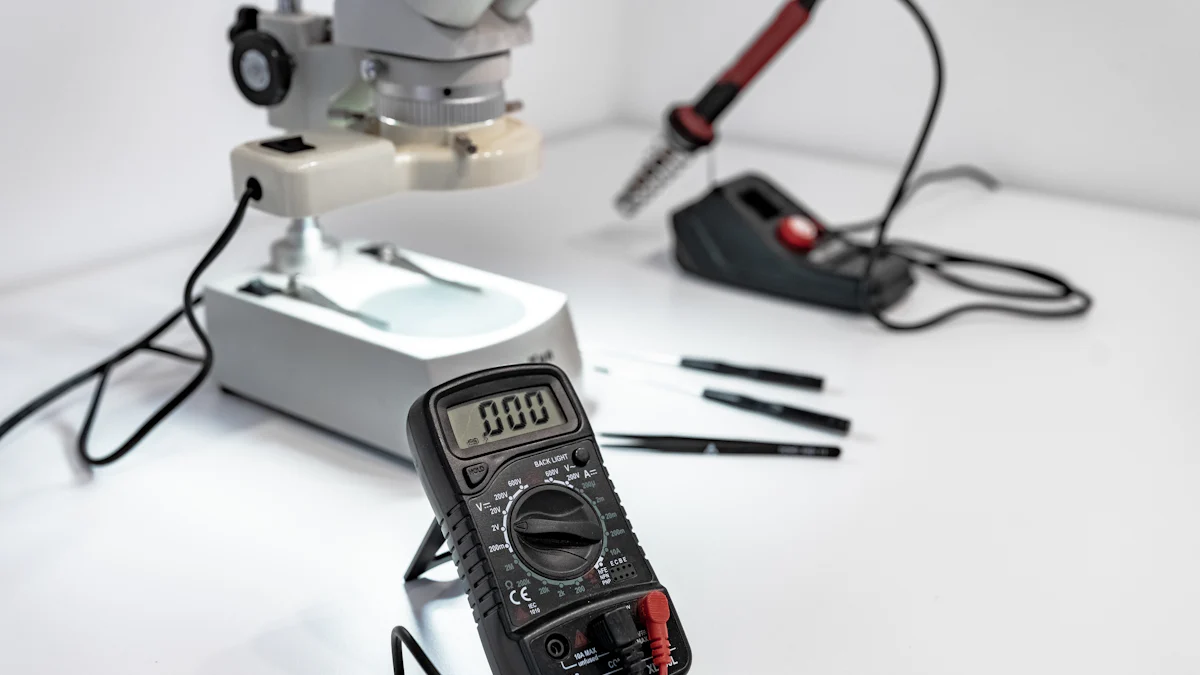
When you measure alternating current (AC) voltage, the choice of voltmeter becomes crucial. AC voltmeter use is essential in many fields, including power distribution, electronics, and telecommunications. You need accurate voltage readings to ensure the safety and efficiency of electrical systems. In these scenarios, voltmeters help you monitor voltage levels, detect faults, and maintain equipment performance.
AC voltmeters play a vital role in testing and troubleshooting electrical circuits. You can use them to verify the voltage supply in residential and commercial buildings. They also assist in diagnosing issues in electronic devices and appliances. By providing precise voltage measurements, AC voltmeters help you prevent equipment damage and ensure optimal operation.
Comparison of digital and analog voltmeters in ac voltmeter use
When comparing digital and analog voltmeters for AC voltmeter use, you will notice distinct differences. Digital voltmeters excel in precision and ease of reading. They provide numerical displays that eliminate reading errors, making them ideal for applications requiring exact measurements. You will find digital voltmeters particularly useful in environments where accuracy is paramount, such as in laboratories and industrial settings.
Analog voltmeters, however, offer unique advantages in certain situations. Their quick response to voltage changes makes them suitable for dynamic testing scenarios. You might prefer analog voltmeters when visual interpretation suffices, and cost is a consideration. They provide a steady display that some users find easier to interpret, especially in educational settings.
In summary, your choice between digital and analog voltmeters depends on your specific needs. If you prioritize accuracy and advanced features, digital voltmeters are the way to go. For basic monitoring tasks and cost-effectiveness, analog voltmeters offer a reliable alternative.

